Thursday, March 9, 2017

Misery


Misery was the second novel I read from Stephan King, after Carrie (still have a soft spot for that one). As an adolescent, I felt I resonated way more with the plot and characters in Carrie than I did of Misery. That’s not to say Misery didn’t scare the pants off of me, it certainly did, just that I wasn’t at a place in my life to appreciate the book the way I am now. Reading it again, I have a greater appreciate for this work. This is one of those King novels that are classic for a damn good reason.
Plot wise is book is about the author of a popular romance series, Paul Sheldon, finding himself trapped by his mentally ill, sadistic “number one fan”, Anne Wilkes, after a car crash. She gets him addicted to meds while she nurses him and tortures him (yeah, heal and hurt dished out by the same warped character) while demanding he bring her favorite romance character, Misery Chastain, back to life in a new novel written just for her. Seems straightforward enough. A tense situation ripe of all manner of horror to play out.
King is brilliant in the way he presents the story through Paul’s perspective. There was never a point that I felt the tension was dipping by having just the two main characters together in a limited space. I found Paul to be a highly engaging character, though perhaps the fact I’m a writer might make me a bit bias. It’s easy to feel for Paul’s plight, and in turn, feel invested in his wellbeing. The setting added fuel to the fire as the isolated and trapped sensation makes the reader feel desperate for Paul to escape.
Truly impressive is the book’s psycho, Anne Wilkes. She is believable in a way many fictional psychos aren’t, she’s unpredictable. While most fictional psychos are given a tragic backstory to explain their motives for killing, Anne is simply a killer. Her mental instabilities are probably genetic more so that created by a tragic past. Anne Wilkes isn’t becoming a killer, she just is one. In fact, she doesn’t see anything wrong with what she is doing. She sees herself as a good person doing the best she can in the world, which makes her all the more terrifying. King crafts a character that is believably suffering from multiple mental illnesses. At the same time, she is generally unaware she has severe problems. She thinks this is just a part of who she is, a part of her personality.


I also liked how King gave her a common sense sort of intelligence (no fancy psychology Dr. Lecter type here). Anne is smart; she ensures Paul is dependent on her by setting up his drug addiction and his need for food/care from her right at the beginning of the kidnapping. No frills, no toying with her prey. Anne knows what she wants and takes the best direct route to get it, even if that is through a foot or a thumb. She has a hearty sort of intellect that is far too often misunderstood as being simple. As a small side note, Kathy Bates does an amazing job of capturing the character in the film.
There is another dimension of this book that I didn’t grasp in my teenage reading. The whole story can be seen as symbolic of an author’s journey writing a novel, with many parts of the story directly reflecting King’s struggles at the time he wrote it. Anne Wilkes is Paul Sheldon’s biggest fan, but she also represents the harshness of readers in a more general respect. Anne punishes Paul severely for trying to break out of his genre, much like what happens quite often with established writers. Anne demands Paul doesn’t take shortcuts with his writing and insists the story be everything she expects while also being something that isn’t stereotypical. Readers can be unforgiving and demanding. As much as Paul is afraid of displeasing Anne, he is also addicted to not only the drugs but writing the story. I willing to wager that most writers feel at least a smidgen of fear regarding what their audience will think of their work, and yet we are driven to do it anyways. I could go on and on about how much I related to this side of the story as a writer, but I’m sure you get the point.

Overall, like all of King’s classics, this is a great read for any horror fan. As fantastic as the movie is, the book is still superior. Well worth settling in and devouring a page at a time.

Wednesday, March 1, 2017

The Silence of the Lambs


After the Lecter appetizer in Red Dragon, I dove into film The Silence of the Lambs (1991) with an appetite for a terrifying and startling psycho. I have seen the movie before, numerous times, but watching it again with more attention to how the story works brought me another perspective. This movie is even more impressive once it is viewed with a critical lens.
The portrayal of the FBI was solid. As I’ve mentioned before, I’m not an expert on FBI/Police work, but everything in this film felt real. Not just the basic protocol or tools of investigation, but the interactions between the authority characters. There is some tension between local police and the FBI in almost a bit of a territorial manner. I would expect this is true to some degree in the field. The FBI, especially Crawford, uses every possible advantage to get information. Crawford essential uses the ambitious Starling as a tactical tool to get Lecter’s cooperation. A fake deal is offered to Lecter, which is countered by Chilton’s deal. A higher degree of politics weaved through this plot than what one might realize if viewing it just for entertainment.
The dog eat dog mentality of many of the characters makes Starling stand out as almost an innocent among the wolves (or in this case, a lamb among those who would slaughter her). Crawford will use any means possible to catch his man and Chilton would do the same to gain notoriety. Starling’s focus is on saving the girl, which gives her a more heroic vibe among the rest of the cast. This is why her interactions with Lecter feel real. He can see the genuine need to protect and rescue that is missing from the other people that have come to consult him. This fascinates Lecter, who lacks the very empathy that is Starling’s defining feature.
Such a polite host

This film features two serial killers. This actually works well to heighten the growing tension and danger in the story. There is a heavy sense of psychological terror in Starling and Lecter’s encounters, while Buffalo Bill is the physical threat. The killers are also beautifully contrasted. For Lecter, killing is a pleasure in and of itself. He has no sympathy for his victims. Buffalo Bill kills for an end product. He purposely dehumanizes his victims, calling them “it” as the killing is a chore to get him what he really wants. Buffalo Bill does have the capability for sympathy but he makes a choice to ignore it. While both are horrific killers, Lecter rises as the more chilling psycho.
The main criticism of this film is typically the presentation of Buffalo Bill as an LBGTQ character. When the film premiered in 1991, positive portrayals of LBGTQ character were rare. I have torn feelings on this. In some ways, this character did seem like he was sending the message that LBGTQ people are mentally ill and potential dangerous. It’s hard to ignore the only character that isn’t straight in this film is a serial killer whose gender orientation/sexuality is one of the greatest motivating factors in why he kills.
Nice nipple ring dude

However, I also don’t think it’s fair to assume that a negative representation was the point for the character’s confused sexuality/gender issues. It is mentioned by Lecter that Buffalo Bill isn’t really transsexual, rather he just hates himself so much he desires to be someone else and being a woman would fulfill that desire. This is vital to the motivation for his murders. He needed to have a reason that made sense in his head for abducting, killing, and skinning his victims for his suit. I know I might get slack for this but I don’t think this is a purposeful jab at the LBGTQ community, just like there are many women or black characters in fiction that may be antagonistic or villainous not because of their gender or skin color but because of their personality and actions. There is more to Buffalo Bill that has led to his warped interpretation of the world.  I’m going to chalk this up to freedom of expression in art, even if I found it personally on the distasteful side for the LBGTQ community.
There are oodles of motifs and themes coursing through this story. The idea of transformation is clear here in Buffalo Bill with the moths. Not only does Bill feel he is transforming into a new form with his suit, but he feels the women he kills are transformed as materials for his purpose. Death is also transformational in other regards, such as for Starling. Her father’s death and her uncle’s slaughter of the spring lambs transformed her from girl into one seeking to save others. Animals as representation of characters appear for both Starling as a lamb and Buffalo Bill as the moth. Lecter’s god complex is visually shown through his treatment of the guards body splayed open and positioned on the cage like an angel. The treatment of women as inferior or objects is repeated through the murders and how Starling is treated throughout the story.

Overall, this film lives up to praise and awards it’s received. It’s visually disturbing at points and hits all the right psychological notes to conjure nightmares. This solid of a tension fueled plot will never become dated. Watch it again, and then again.

Monday, February 20, 2017

Red Dragon


Certain characters rise above the basic idea of a crazed killer to become a pop culture phenomenon. Norman Bates from Psycho has been firmly planted in the minds of the public since the 1960’s as a memorably unique character. However, in more recent pop culture, the idea of a psychotic serial killer is exemplified by one highly intellectual doctor, Hannibal Lecter. Reading his debut in Red Dragon by Thomas Harris, his infamy is easy to recognize, even as a more minor character. With a book this good, it’s impossible not to have iconic characters and a permeant mark on the horror genre to spring forth.
To be clear, Red Dragon has two fascinating psychotic serial killer adversaries for the FBI and Will Graham to contend with. Lecter isn’t the primary threat, as he is locked up securely throughout the course of the story. The Red Dragon (the press initially calls him the Tooth Fairy) is the killer on the loose.
The Dragon is well built as a psycho; a shy man with an extreme case of low self-esteem and body-dysmorphic issues based on his hare-lip. Harris includes a backstory section that gives the reader the opportunity to see how the Dragon grew into the serial killer he is, yet he is careful to leave the tid-bits in the past for the reader to construct for themselves. Specifics on his trauma from his mentally ill grandmother as well as his unloving mother and step family seep into his method of killing and choice of victims. This was done brilliantly to allow the audience the feeling of piecing the Dragon’s mind together themselves. It also created a twinge of sympathy for the man, while building disgust of him by his actions.
At the same time, Harris takes care to give Lecter a chilling sense of mystery. Graham isn’t able to give any more insight into why Lecter kills besides the fact that he enjoys it. Lecter is unnervingly calm and calculating. His interactions with Graham and the Dragon are limited, yet the reader gets the sense he is manipulating some of the action, watching over the other characters and deriving pleasure from the blood spilt. His code to give the Dragon Graham’s home address leads not only to the end demise of the Dragon, but the eventual erosion of Graham’s marriage and physical harm to Graham. Readers can’t help but wonder if Lecter had planned this all along. While the Dragon draws some understanding and a bit of pity from the audience, Lecter is irresistible interesting without explanation. It’s no wonder audiences have been insatiable for the character ever since.
Will Graham is also a well-developed character. The audience instantly identifies with him from the opening scene- a man who has put his demons behind him to have a relaxed family life only to have the past pull him back. I think everyone can sympathize with that, people are often plagued by the past. Readers might identify with him as an empath type character that must confront human violence in its extreme over and over again. He’s not the gloating, glory seeking hero, which is refreshing. His intuition isn’t magical either. There is a whole cast of specialists that add to his natural gut-feeling. The hunt for the Dragon is pieced together a clue at a time, not in a quick accurate succession. Graham does find a way into the killer’s head, but it is hard and painfully won. Although Graham wasn’t the most interesting of the characters (who really can compete with two bizarre psychos?), he does manage to hold his own in the story. I cared about his and his family’s safety enough to feel the tension in the story.

I felt adding in the Reba McClane character to disrupt the killer’s routine was an interesting twist. People expect that psychos have a pattern that is repeated over and over again. Harris explores here what would happen if something occurred in such a life changing way that the pattern is broken. The Dragon has a set ideas of himself and the world, and along comes this beautiful blind woman (careful crafted to be a strong individual and not just some helpless victim) that gives him evidence the world is not as he has assumed. His concerns about his physical appearance don’t matter to her, and he is confronted with a genuinely loving interaction with a woman which he never had expereinced before. Harris splits the Dragon from the man and records the battel between them for the reader. I’m not sure exactly how I feel about this deviation for the killer. While this was an interesting peek into the complicated workings of the killer’s mind, it felt as if we had gotten off track as far as plot goes. Suddenly the next family on the list took a backseat and the possible redemption took over. It also made the surprise attack at the end awkward. The reader now perceives the Dragon as a troubled man, not a soulless killing machine. Having this character ruthlessly attack Graham in the manner he did just didn’t sit completely right with me. For some reason, I felt slightly disappointed.
The investigation felt authentic for the most part. At some points, it did seem that Graham had some special treatment I wasn’t positive he could get, such as being able to wander through the Leedes’ house/crime scene alone and being able to visit Lecter on a whim. However, I honestly have no idea what the FBI is actually capable of, so maybe I’m not the best person to judge the authenticity. Nothing popped out to me to be incredible inaccurate.
I would like to add that in many ways, The Sculptor felt like a poorly executed imitation of this book after examining them side by side.

Overall, this is a great read. Any little slips of head-hopping POV and such are invisible under the strong storytelling. A solid read that anyone who enjoys a good psycho and a creepy story. 

Monday, February 13, 2017

The Sculptor


Nothing is more of a letdown than a book that has a good concept but was executed poorly. The Sculptor by Gregory Funaro is definitely one of those books that underwhelms when it could have been something unique. From the plot, to the setting, to the unrealistic killer, this is a nightmare of a disappointing read.
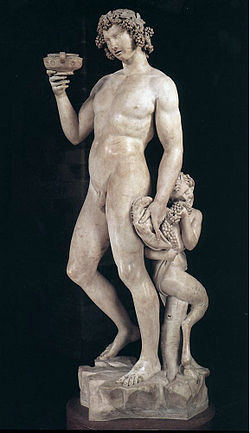
Some of the concepts behind the killer caught my interest. I’ve long since been interested in Bodyworlds and the plastination process. The idea of a human being preserved in such a manner without consent is both unnerving and uncanny. Having the killer utilize this new preservation technique is a fascinating idea. Then Funaro adds an obsession with Michelangelo to the killer, so that he uses the plastination process to create replicas of the artist’s sculptures from human flesh. I’m still in. Sounds like a creepy yet smart sort of killer who selects his victims based on more than pure emotional/sexual gratification. Now add in some weird “awakening from the stone” purpose crud with incest and physical abusive mommy issues. Pile on warped homosexual urges, confusing spiritual revelations, and genius intellect. But, that’s not all! This guy is also a highly skilled chemist that is so buff he can lift a statue that took four FBI agents to carry. Plus, he’s a multi-millionaire. Sound believable? Yeah, I didn’t think so either. This psycho is conveniently overkill on every level he needs to be to the point he’s basically the Terminator (for the record, the book does reference him as looking like the Terminator).
The villain is perfect in every way he needs to be to not only kill but explain where his psychotic tendencies originated. Sadly, everyone else is perfectly suited to their role in the story as well. Pretty Dr. Cathy Hildebrant is flawless heroine material. Her only fault is putting up with her cheating ex for too long, however that was remedied by divorce at the beginning of the book. She has already moved on. FBI Agent Sam Markham is the perfect hero, using personal tragedy in his past to fuel his need to stop serial killers. They fall into a predictable romance, which works surprisingly well to track down the killer and save each other from him. Everything in pretty little boxes that are wrapped up in matching bows.


The plot is the standard serial killer on the loose, FBI agent on the case while protecting the main female character who the killer has a particular interest in. Yep, that straightforward. It’s been done into the ground. I think what makes this plot exceptional irritating is that there was no new spin on that formulaic structure. Actually, it wasn’t even done well as just the basic plotline. The authorities figure everything out about the killer like magic. There are no real surprises in their investigation. They actual use many of the phrases identically to the way the sculptor uses them, like referring to the people he kills as “materials” and guessing his vague “awaken from the stone” motivations. The POV hops head at random places when the  author felt someone else’s perspective was better at the moment, then hops somewhere else. My point is, all the characters, the POV, and the plot points were conveniently perfect to move the story along the way it needed to go.
Funaro did his research for this book. I’m sure he went through mounds of articles and books on Michelangelo to get all the information required for this novel. It shows, because he dishes out large chunks of this research in wads of info dumps throughout the story.  A large amount of the text was occupied by conversations that went into long speeches of background information on Michelangelo, his history, and theories regarding the artist and his work. At several points, Markham is discussing these topics with Cathy, who is an expert on Michelangelo, and reading her sections of her own book. At one point, he actually say “as you know” to her before going into a word vomit about information she already knew that came from her own book. This hurt some soft squishy place inside me. Why go through all the trouble to do such detailed research only to present it in info dumps that don’t engage the reader? Why?
As much as Funaro took steps to ensure the reader got ever bit of the information on Michelangelo he felt was necessary for the story, the sensory details and setting is severely lacking in this book. I forgot on several occasions where we were as far as location goes, not that the area itself was of any importance in the story. It could have taken place anywhere in the country and would have played out the same. No particular smells or sounds that left any impression me or engaged me deeper into the story. Funaro stuck mainly to describing the visual, except when he goes into the sensations of the painful “awakening” deaths. This only served to distance me further from the story.

The biggest let-down of this book was the ending. The overpowered villain is easily tricked by Cathy as she magically understands his twisted history with his mother in a sudden revelation. Cathy proceeds to hit all the right notes to get the sculptor to release her, as if she had studied his past in detail. Interesting, I didn’t realize she was psychic before that scene, but she must have been in order to pull off that performance. Our Hero, Sam, miraculously manages to survive numerous gunshots in order to save the heroine at just the right moment. She, in turn, is able to save them both moments later while everything goes up in over-budget explosions. Ka-boom! Yet, the final few paragraphs prove the Terminator style sculptor has survived the unsurviable in order to kill again. The whole ending is unrealistic and ridiculous. All I can guess is that the author wrote himself into a corner having Cathy captured by the sculptor and decided that he had no other option than to go all out unbelievable to wrap up the book.
One final thing I would like to note about this book is on themes and meanings. Funaro hinted, repeatedly, at several themes in this book but none of them panned out to make any sort of significant meaning. The “awakening from the stone” motive throughout the book was vague in that it seemed to be about the dwindling intellectual content of entertainment and arts in the modern world, then became about realizing the buried fear of life through death, and then about personal spiritual revelations that connected the sculptor to Christ in weird incest pact with his mother. By the end, it made zero sense what the sculptor hoped to accomplished with the killing or what the point of the book was. The same goes for the homosexual themes. Originally, the killer was profiled as being attracted only to males, mirroring Michelangelo, and only using males for his sculptures. I thought there was going to be some sort of theme building there about the cruel treatment he received regarding his sexual orientation that lead in part to his need to kill. Instead, the story shifted away from that towards the sexual relationship between the killer and his mother. I’m particularly fond of messages and themes in books. I want to feel a story has made me think about something, especially if it’s in a new light. In this story, nothing panned out. I would have rather there been no themes or underlying message at all than a bunch of weak attempts that amounted to nothing.
Overall, this a great book to show what not to do with a psycho. Even if you’re a fan of structured plots that give reader exactly what they are expecting, the info dumps and blandly perfect characters will likely leave an unsatisfying taste in your mouth. Now, I’m going to go take my copy of this book, soak it in acetone and light it on fire. Hopefully, it won’t survive.

Wednesday, February 8, 2017

The Church of Dead Girls


There is something magically to a reader about a book that opens with a great scene that sets the mood for the rest of the story to follow. On the other hand, there is something extremely frustrating about a story that doesn’t live up to that first scene. Sadly, The Church of Dead Girls by Stephen Dobyns falls into the latter category for me. Perhaps if I had started this book as a crime thriller I would be praising where it works well, but I found it disappointing.
The beginning chapter gives the reader a detailed tour of an attic where three dead girls are propped up and decorated in a deliciously creepy manner. The specifics of the scene hint at a psycho outside of the typical strangle/stab/shoot and dump the body sort of murder. Dobyns wets the audience’s appetite with this opening. I was itching to jump into this killer’s head and get to the juicy bits of crazy floating around in there. I was ready to tear into the book. However, I found the next chapters a letdown as the story pivoted away from being about a killer to the paranoia of a small dreary town where everyone knows everybody else’s business. It felt like being sold a ticket to an action movie and sitting through a historical drama that had a few battle scenes.
Dobyns builds the town of Aurelius believably. The cast of characters fill the range one would expect in every small town, from the trouble makers, to the political pot stirring outsider, to the tragic widower now a single parent, to the promiscuous woman that’s heated up the sheets of nearly every man in town. The issue I have with this approach is that the list of Aurelius’ inhabitants is long and annoying to read through. Everyone has history and people have complicated relationships with each other. It was difficult to connect deeply with any of the characters. I didn’t find any of them really likeable either, but I think part of that was the distance. These were people I was hearing about from afar rather than experiencing the story through them. I was peeping in their town, listening at the door and looking through windows. Dobyns may have put these characters at a distance to purposely give the reader the feel of spying on this little community and to provide a good chunk of suspects. However, this kept me from becoming invested in the characters and made much of this a chore to read.
The strange first person POV also kept me at a distance. The unnamed narrator is retelling the story much like someone gossiping at times. Other times, the narrator switches into a weirdly omniscient voice that is able to recount other character’s feelings and events that our first person narrator couldn’t possibly have any knowledge about. Not only is this an unreliable narrator, he’s an inconsistent and impossible one. I didn’t find the narrator any more likeable than the townsfolk, although I did empathize with him a smidgen more. He feels like an outsider in this community yet is roped into the town’s drama. Growning up in a small town myself that I didn’t fit well in, I can understand the narrator on that level. Beyond that, I felt as removed from him as I did with everyone else in Aurelius.
The slow deterioration of the town into chaos as the girls disappeared was well done. As I mentioned before, had I gone into this book from a thriller perspective I think I would have enjoyed it more. Watching the suspicions flare up the prejudices that lie just beneath the surface of the town was as chilling as the murders. In a way, the killer is almost an afterthought as the decent of the town consumes the majority of the plot. The group mentality here is unnerving; those considered outsiders are targeted first. The longtime residents can’t fathom that one of their own could possibly be responsible for the missing girls. The death of the new professor, who brought his Marxist viewpoints to the sleepy town, was a nice touch on showing the radical opposition to any ideas or beliefs that are not accepted by the community. Once the citizens turn on each other, violence and vandalism are rationalized as “doing the right thing” when in fact it is fear that is driving them. The case clearly made that no one can hide in a seemingly safe place from the evils of humanity.
The ending was handled with a heavy dose of symbolism. The killer is shot in the back, thereby betrayed, by his own brother, which mirrors how neighbor turned on neighbor throughout the ordeal. The cutting off of the left hand by the killer is his acceptance of his own sexual/dirty nature. The interesting twist at the end of the narrator stealing the killer’s hand and preserving it wrapped up the theme of the story perfectly – the brutal and sexual urges that plagued the killer can be found in everyone, so there is no one you can trust.
Overall, this is probably a better book than I’m giving it credit for here. I expected a story centered on a psychopathic murder, and when I didn’t get that story I was immediately discouraged. My disappointment colored my reading. Though the book is not without its faults, I will probably read it again the in the future as there were parts that interested me. So, if you’re looking for a book about a killer, look elsewhere. If you want a creepy glimpse into small town hysteria, this might be worth a read.  

Monday, January 30, 2017

American Psycho

Some books are meant for entertaining with a lighthearted message about friendship and love. Other books are more on the pessimistic side, meant to expose the darker places humanity resides. American Psycho by Bret Easton Ellis is a decent into the very essence of evil in American society. Just to be clear, this novel cuts deep. No cushion for the blow, no redemption. And it’s absolutely brilliant.
I’m a fan of unreliable narrators. They keep the reader on their toes, looking for any clues as to exactly what is the truth of the matter. Ellis’ choice to use Bateman as the unreliable narrator works to preserve the themes of the story while challenging readers to discover their own thoughts on the story. Is Bateman actually going out and torturing/killing after his workout and drinks at the most expensive place in the city? Is he just fantasizing and confusing what he thought about as real events in a spiral towards madness? Is he perhaps engaging in some of what he claims, such as torturing animals, and imagining the more horrific scenes? There is no way to tell for sure. In any of the possibilities, the book is still terrifying. Even if Bateman is not a murderer, he is still walking around daydreaming of killing and slipping out of control. It makes you look at the person picking out apples beside you in the grocery store with a little unease.
One of the things I loved about this book was the use of recurring symbols and ideas to strengthen the theme of soulless extreme capitalism in American culture. Les Miserables is mentioned throughout the book in posters, on the sides of buses, people humming songs from in, and so on.  I thought this was a great way not only to boost the ‘80’s feel of the setting but to make a point about Bateman and his colleagues need to be on the peak of popular culture. The musical was the biggest thing in New York at the time, anyone who is anyone would have seen it. This is why it registers on Bateman’s radar. However, he seems to be unable to grasp the message or emotions of that musical. It is only important because it’s popular. I also felt it was a poke at Bateman and his associates, as if they are the miserable ones and simply don’t realize it.
The Patty Winter’s Show is a way for Ellis to show Bateman’s mental health decline. The content of the show becomes increasingly bizarre, with juggling Nazis and an interview with Bigfoot. This reinforces the unreliable narrator feel of uncertainty. Was this really on tv or is this what Bateman saw through his insanity? The fact that he has almost an obsession to the show to the point he misses work meetings to watch it is also very revealing. Obviously, what’s on television is more interesting than the real people he has to deal with day to day. This extends to his focus on video, or his need to return his videotapes. He even films several of the murders. The videos and the devices to make and view them on are more appealing to Bateman than forming any sort of emotional bond with others.  
The addiction to designer fashion- I have mixed feelings on how Ellis handled this. Bateman dissects each person’s outfit he comes across in detail. In fact, Bateman is more capable of picking out which designer items came from than the names of his colleagues. This reinforces the theme; to Bateman everything is an object to be measured by quality and expense. However, as a reader, this gets old quick. It didn’t take long before my mind is drifting over the numerous lists of what people are wearing. I won’t lie, I know zip about ‘80’s fashion (or fashion period), so to me this mostly just cluttering the narrative up.  They were in expensive clothes, got it.
The overall structure of the book is not really the typical beginning, middle, and end readers are accustomed to. This was written as if Ellis had cut out a certain number of months of Bateman’s life that include his decent into madness (and possible serial killing spree) and made that a book. Bateman is a psychopath from the beginning, and remains so in the end. One could argue that perhaps he has come to understand himself by the end, finally realizing this is just what he does, but I felt he knew that already. He calls himself a psycho or explicitly threatens/states horrible things to dozens of people who aren’t paying attention to him throughout the book. I liked the anti-climactic ending; I get to believe that Bateman lives on in his warped world, but I know that will likely be a negative for others.
Probably the biggest controversy surrounding this book is the graphic violence, especially sexual torture and death of women. Ellis doesn’t beat around the bush with his gore. It’s brutal, sharp, and intended to make the audience squirm (and if you don’t squirm, I’m keeping an extra close eye on you). The big question is, was the graphic violence necessary? For me, yes. Absolutely yes. Hear me out on this. Considering the piece is written in first person from the perspective of the psychotic killer (or man suffering hallucinations) to skim over the details of the murders would be a disservice. Bateman lives in a pretty boring world. His so called friends talk about fashion, who’s who in the business world, their idol Trump (ummm, yikes), women they would like to sleep with, and other mundane stuff that really doesn’t matter in the grand scheme of things. They drink, take various drugs, and conduct various affairs to try to escape the fact they lack real emotional relationships and are bored. For Bateman, those sins aren’t enough. The power and rush he feels while torturing and killing are the pinnacle of his experience in everyday life. He would want to reveal in those moments more than listening to someone talk about how the Bahamas are for a vacation option at yet another overpriced restaurant. It would have been out of character for him to tone down the violence. As a woman, some of these scenes were rough to read through, but I felt that it wasn’t just pointless violence. Bateman enjoyed killing beautiful women because he saw them as purely objects for his own pleasure, even more so than his associates.

            Overall, I loved this book but it’s not a light, easy read. Be prepared to dig a little to fully digest and enjoy it. Hold onto something soft and comforting for the violent scenes, like a teddy bear or comfy husband.

Tuesday, January 24, 2017

Psycho


            If I were to mention the phrases Bates Motel, the Classic Psycho, or shower murder scene, the first thing that probably comes to mind is Alfred Hitchcock’s 1960 cult classic film. The screeching violins and the unnerving performance Anthony Perkins gave as Norman Bates have a permanent place in pop culture. As great as that film is, this post is going to examine the novel that inspired the film, Robert Bloch’s Psycho. After reading this book, I can see why Hitchcock jumped on this source material for a movie. Psycho is a tension filled read that gives reader’s a view into the mind of someone mentally disturbed.
            One of the things that catches the reader from the start is the way Bloch masterfully uses the dynamic of relationships to get deeper insight on the characters. This is especially true of Norman, whose conversations with his mother and internal rambling between the normal persona and little boy persona showcase his motivations and insecurities. For Mary, how she thinks and feels about her relationships with her sister, Lily, and her fiancĂ©, Sam, gives the reader a solid impression of who she is as a person.
            This novel is filled with active yet sympathetic characters. Everyone takes action based on their own goals which causes consequences that moves the plot forward. For example, Mary hastily stole the money and, in her rush to evade any repercussions, ends up lost enough to stop at a random motel along the highway. She wasn’t some flat innocent woman that just happened to fall into Norman’s psychotic world. Bloch was careful to make her a sympathetic character instead of merely a ‘bad’ person who has committed a crime that seals her fate. The audience is able to understand her desperation and her impulsive theft.
Norman is the prize character of this piece, obviously. The desire to simultaneously reject and protect his mother is a trait that readers can empathize with in some way or another. Everyone has experienced some variety of teen rebellion or at least growing apart from parental figures as they started off into their own life. Norman is trapped by his overbearing mother to such a degree that even after her death she is a voice in his head. I would argue the scenes where Norman is engaging with his other personas are the most interesting in the book. Bloch is careful to treat Norman’s mother like a real character and constructs these scenes to where it’s not obvious Norman is actual alone and suffering from dissociative identity disorder.  However, one of the negatives of reading this novel after Hitchcock’s popular film is that Bloch’s twist has little impact. Readers know from page one there’s no mother outside of Norman. In way, this makes for an interesting read to see how Bloch built the story to provide that twist. On the other hand, I can’t say for sure if the twist was a successful surprise for me or not. I’m just going to assume it was since the story has become cult classic.
Towards the middle of the book, the plot starts to drag a bit. Once Sam and Lily get involved in the search for Mary, they spend a great deal of the book waiting and dreading. They wait for Arbogast, they wait on the sheriff, and they sit around and wonder and worry. I don’t think this is necessarily a flaw in the text. I’m guessing this slow pace is meant to build up tension in the reader for the big twist ending. Part of the problem with knowing the twist is that this doesn’t quite increase the tension the same way. Instead of the reader gripping the book desperate to find out if Lily and Sam will be able to uncover what happened to Mary and survive Norman’s psychotic mother, the audience feels as if this part of the plot has been drawn out. This may also a bit of presentism on my part; I wanted the plot to go a bit quicker in the way of more current works of fiction.
Something I found hit perfectly with the book was the ending. Both the external and internal conflicts were resolved, but Bloch was able to give them both a finish that was neither fully positive nor negative. Bates is caught and brought to justice (taken to psychiatric facility) for the resolution of the external conflict. Although Lily is sympathetic and finds the decision not to give Bates a prison sentence fair, it does leave a sour taste. Norman Bates has killed multiple people including his own mother. He even planned out the best way to dispose of the bodies and cover his tracks. Mary also commits a crime on a whim, only later to come to her senses and realize she was being a little crazy to think she could get away with the theft. It makes one ponder if all criminals have some level of insanity and, if that is so, how do we differentiate between ones that deserve a prison sentence and ones that deserve mental health? In Norman’s internal conflict, the mother persona wins over completely, however she pushes the guilt onto “the boy” and “the man” personas. In the end, Norman has escaped his mother’s tyranny by becoming her, but any remorse for his actions is erased in the process. Again, it’s a finish that leaves the reader feeling uncomfortable.

Overall, this is a classic and worth the brief time it will take to read. Reveal in the masterful way Bloch handles Bates’ internal struggles and the thought provoking ending.